How to Build a Digital Marketing Funnel That Turns Strangers Into Customers
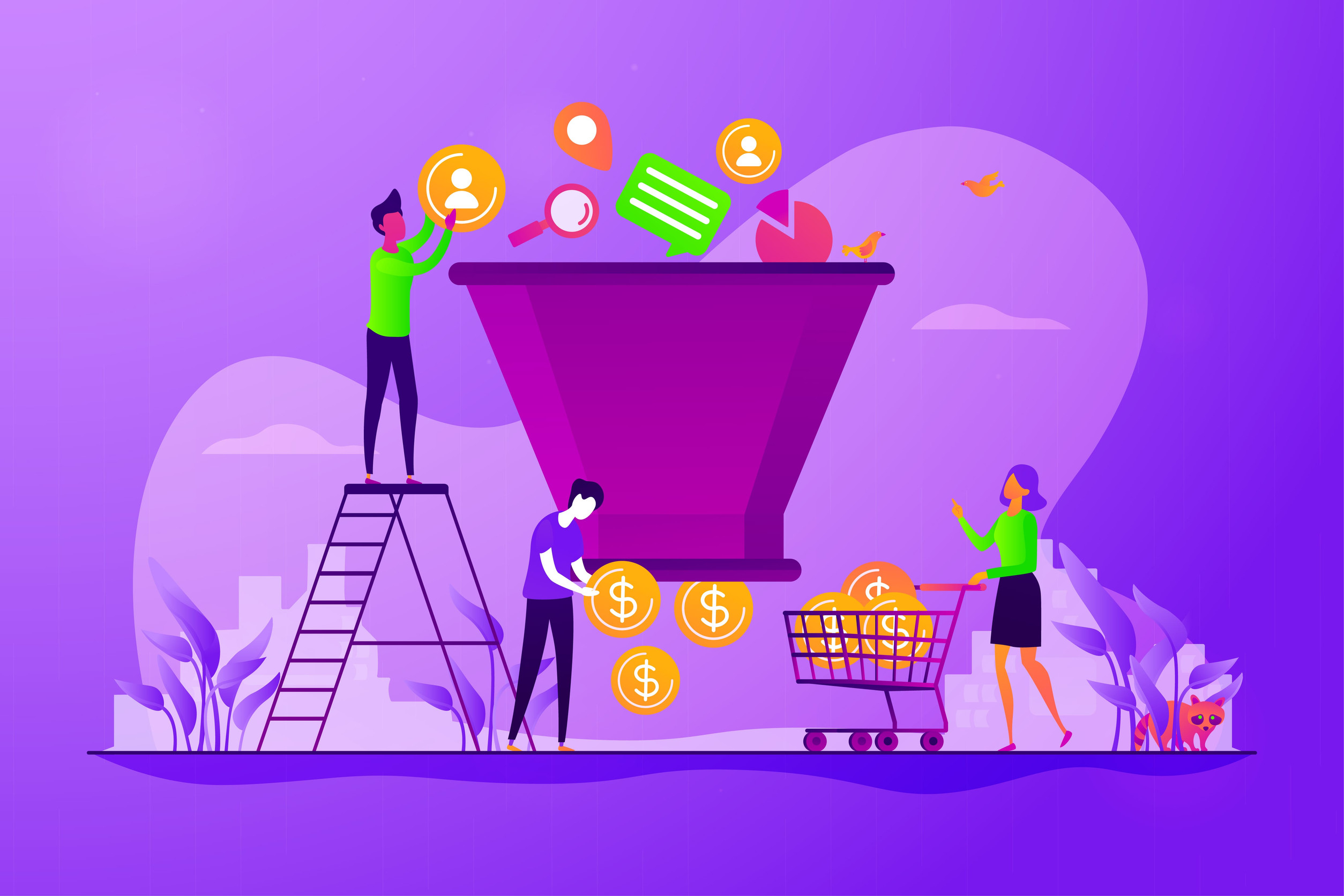
Most small businesses aren’t losing customers because of a bad product. They’re losing them because the path from “I just heard of this company” to “I’m ready to buy” is broken, unclear, or missing entirely.
That’s what a digital marketing funnel fixes. It gives every touchpoint a job — and connects them into a single, intentional journey that moves people from curious to convinced. Here’s how to build one that actually works.
Why Scattered Marketing Stops Short Of Real Growth
Running ads, posting on social media, and sending the occasional email isn’t a strategy — it’s a collection of tactics. Without a funnel connecting them, each effort starts over from scratch. Awareness doesn’t lead to consideration. Interest doesn’t lead to action.
The result? Wasted budget, inconsistent leads, and a growth curve that plateaus.
A funnel changes that. It maps your customer’s decision-making process and makes sure your marketing meets them at every stage — with the right message, at the right moment, on the right channel.
Stage 1: Build Awareness That Reaches The Right People
The top of your funnel has one job: get in front of people who have the problem you solve, before they know you exist.
That means your messaging can’t lead with your company. It has to lead with their problem.
What to do:
- Run awareness ads (paid social, display, YouTube) focused on the problem or outcome — not your product features
- Create search-optimized content that answers questions your audience is already typing into Google
- Show up on social channels where your audience actually spends time, with content that earns attention instead of demanding it
The goal at this stage is relevance, not conversion. You’re introducing yourself, not asking for anything yet.
Stage 2: Send Awareness Traffic To A Landing Page That Converts
This is where most small business funnels fall apart.
Someone clicks your ad, lands on your homepage, and gets… everything. Your full service menu. Your about page. Your blog. Your footer with 12 links. And no clear reason to take the next step.
A high-converting landing page removes all of that friction. It has:
- One offer — a free audit, a consultation, a download, a quote
- A headline that mirrors the ad — so the visitor immediately feels like they’re in the right place
- Clear proof — a stat, a testimonial, a recognizable client logo
- One call to action — not three
When the promise in the ad matches the experience on the page, conversion rates climb. When they don’t, visitors bounce — and you’ve paid for a click that went nowhere.
Stage 3: Use Email Nurture To Build Trust Before The Sale
Not every prospect who fills out your form is ready to buy today. That’s not a problem. It’s an opportunity — if you have a nurture sequence in place.
Email nurture is the middle of your funnel. It’s where you turn a cold lead into a warm one by showing up consistently with content that’s actually useful: tips, case studies, behind-the-scenes looks at how you work, answers to the questions your sales team hears every day.
A basic nurture sequence for small businesses:
- Email 1 (Day 0): Deliver what you promised + quick intro to who you are
- Email 2 (Day 3): Teach something valuable. Ask nothing.
- Email 3 (Day 7): Share a result or case study from a client like them
- Email 4 (Day 14): Address the most common objection your prospects have
- Email 5 (Day 21): Make the ask — schedule a call, start a trial, get a quote
Each email has one job: keep them moving forward.
Stage 4: Give Every Channel A Defined Role
Here’s a mistake almost every small business makes: expecting every channel to do everything.
Paid ads aren’t supposed to close every sale on their own. Email isn’t supposed to create first-touch awareness. Social media isn’t supposed to replace your landing page.
Each channel works best when it has a clear, defined role in the funnel:
| Channel | Funnel stage | Primary job |
| Paid ads / SEO | Awareness | Drive qualified traffic |
| Landing pages | Consideration | Capture interest, generate leads |
| Email nurture | Consideration | Build trust, handle objections |
| Retargeting ads | Decision | Re-engage warm leads |
| Sales follow-up | Decision | Convert |
When you stop expecting every channel to do everything, your funnel gets dramatically more efficient — and so does your budget.
Stage 5: Optimize The Conversion Point
The bottom of your funnel is where interest becomes action. Most businesses underinvest here — assuming that if someone has made it this far, they’ll close themselves.
They won’t, not always. A few things that move people across the finish line:
- Urgency without manipulation — a genuine offer deadline, a limited availability window
- Risk removal — a free trial, a money-back guarantee, a no-commitment consultation
- Specificity — concrete numbers outperform vague promises. “Our clients average 20–50 new customer opportunities per month” is more convincing than “we get results”
- A clear next step — one action, stated plainly, with no ambiguity about what happens when they click
What A Well-Built Funnel Actually Changes
When your funnel is aligned, each stage answers the next question naturally. The stranger who sees your ad understands their problem. The visitor who lands on your page sees the value. The lead who gets your emails builds the confidence to act.
The result isn’t just better conversion rates — it’s a more predictable business. You stop guessing which tactic matters and start building on what’s working.
At FT Media, we help small businesses build funnels like this from the ground up — connecting awareness, landing pages, email nurture, and conversion strategy into a repeatable system that drives growth month after month. Our clients saw an 86.5% increase in new customer opportunities last year alone.
Ready To Build A Funnel That Actually Converts?
Get your free website audit and see exactly where your current funnel is losing momentum — and what to do about it.
Share This Story, Choose Your Platform!
Article Sections
- Why Scattered Marketing Stops Short Of Real Growth
- Stage 1: Build Awareness That Reaches The Right People
- Stage 2: Send Awareness Traffic To A Landing Page That Converts
- Stage 3: Use Email Nurture To Build Trust Before The Sale
- Stage 4: Give Every Channel A Defined Role
- Stage 5: Optimize The Conversion Point
- What A Well-Built Funnel Actually Changes
- Ready To Build A Funnel That Actually Converts?
- Related Posts
- Ready to stop leaving leads on the table?
Search
Get Tips to Grow Your Business
Sign up for the latest marketing insights, right to your inbox.