Medical SEO: What Patients Check Before They Book Your Practice
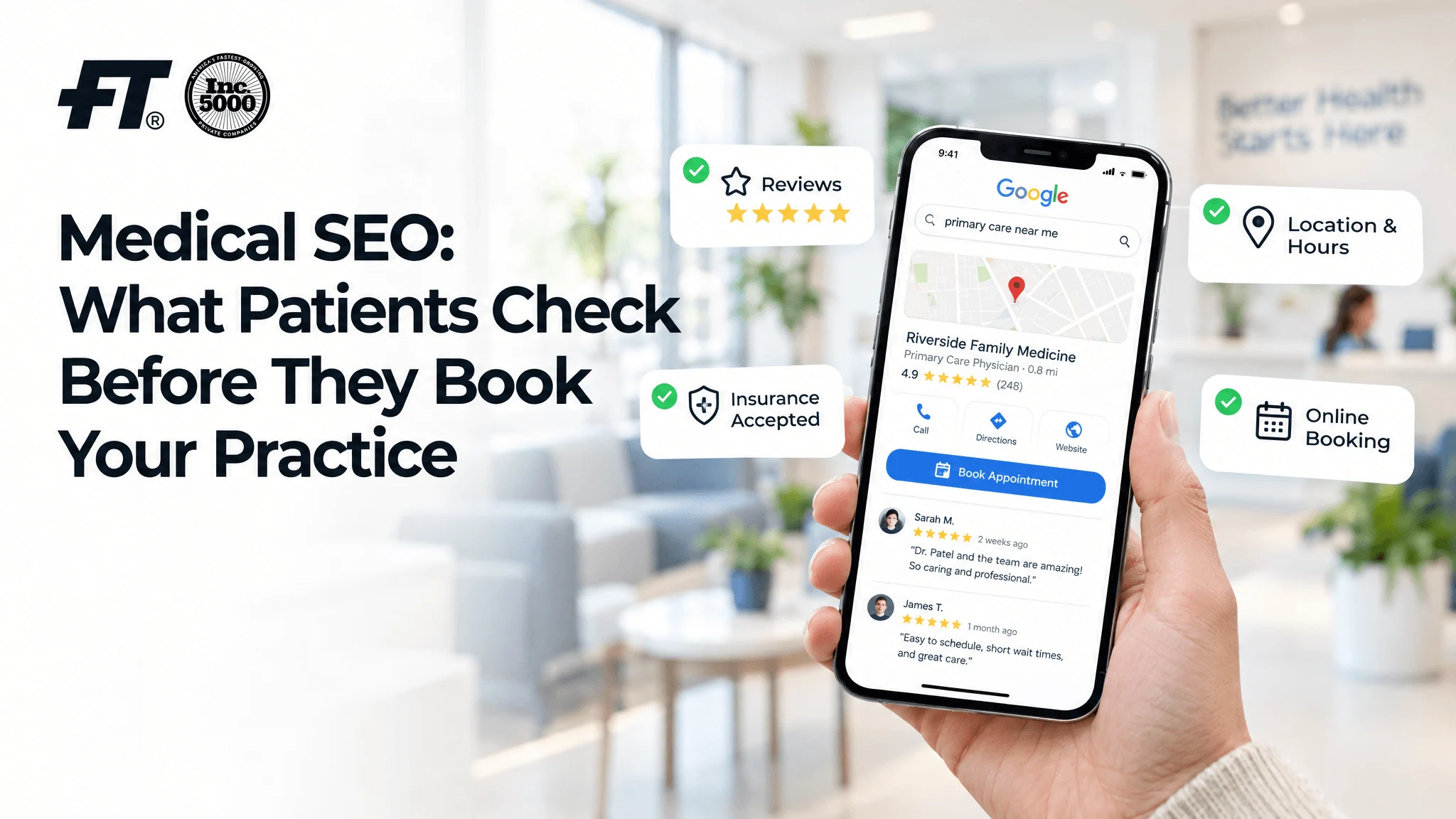
A new patient has a sore throat or a nagging knee, and a phone in hand. They search, scan a few results, and book whoever looks trustworthy. That’s what medical SEO is about: passing a quick check you never see. Six checks matter most. Here they are, plus how our medical marketing programs help you pass them.
Do You Show Up When They Search?
Patients Pick From the First Few Results
Someone types a need and a town, then taps near the top. If your practice isn’t there, you’re not even considered. The patient never knows what they missed. Neither do you. Specific searches signal a patient who is ready to book.
Give Each Service Its Own Page
Build one page per specialty, service, and location. Have a provider review the facts. Google says it favors helpful content that shows first-hand expertise, and your clinicians have plenty. Start with your most requested services. Accuracy matters most in health topics.
Does Your Google Profile Answer Their Questions?
Patients Decide Right in the Map Results
Many never open your website. They see hours, photos, and a phone number, then call. Wrong hours or an unclear note about new patients means a lost appointment. It happens quietly. Photos also reassure nervous first-time patients.
Treat Your Profile Like a Front Desk
Keep hours, services, and provider details current. Add real photos of your office and waiting room. Google weighs relevance, distance, and prominence in local rankings, and a complete profile supports all three.
Do Your Reviews Look Recent and Real?
Patients Read Between the Stars
Picture a practice rated 4.8 with reviews from this month, and another rated 4.8 whose latest review is two years old. Patients wonder which one is still doing well. Recent proof wins. A steady stream of new reviews signals an active, caring practice.
Ask Often, Reply Carefully
Share a review link after visits. Google lets you ask for reviews but not pay for them. Never confirm that someone is a patient in a public reply, since privacy rules apply. This costs only time, so if you’re at capacity, start here and stop.
Does Your Website Work on a Phone?
Most Patients Search on Mobile
Tiny text, slow pages, and a phone number you can’t tap all lose appointments. A worried parent at 8 p.m. won’t pinch and zoom. They’ll just call the next practice. Slow pages lose them in seconds.
Make the Next Step Obvious
Pediatrix paired a mobile-first website redesign with SEO and content. Organic traffic rose 227%, and phone calls rose 96%. Put a tap-to-call button on every page. Fewer taps mean more booked visits.
Can They Book in One Tap?
Missed Calls Are Missed Patients
A patient who reaches voicemail often tries the next number on the list. Lunch hours and after-hours calls add up. Most practices don’t know how many they miss. A callback within minutes can save the visit.
Track Every Call Back to Its Source
We set up CallRail call tracking and a client dashboard, so you see which searches and pages bring calls. Then we review the numbers together each month. Guesswork ends there. Online scheduling helps too, if your system supports it.
Can Your Team Keep This Up?
Your Staff Already Has a Full Day
Front desk and clinical teams are stretched thin. Pages go stale, and listings drift out of date. SEO needs steady attention, not one big push. Consistency wins.
Split the Work
Let your team handle review requests and quick profile updates. Hand off page writing, directory listings, and monthly tracking to a partner. Providers only need to approve the facts. A small weekly routine beats a yearly scramble.
Medical SEO FAQ
Q: How much does medical SEO cost? A: No flat number fits. Price depends on your specialty, your competition, and how many services and locations you want to rank for. Ask for a written scope and monthly reporting before you sign. Our free marketing review gives you real numbers.
Q: How long does medical SEO take? A: Early movement often shows in three to four months. Steadier results usually take six to twelve. Crowded metro areas tend to take longer.
Q: Is medical SEO different from regular SEO? A: The basics match, but health content deserves extra care. Keep it accurate, have a provider review it, and never post patient details.
Medical SEO Works When Patients Can Find, Trust, and Reach You
Medical SEO comes down to six checks: showing up, a complete profile, recent reviews, a phone-friendly site, an easy next step, and steady upkeep. If you’d like a straight answer on where your practice stands, call (888) 468-8785 or schedule a free strategy consultation. Whether SEO, ads, or both fit, you’ll leave with a plan. No pressure, just numbers.